
How to Choose a Hospital Bed for Home Care
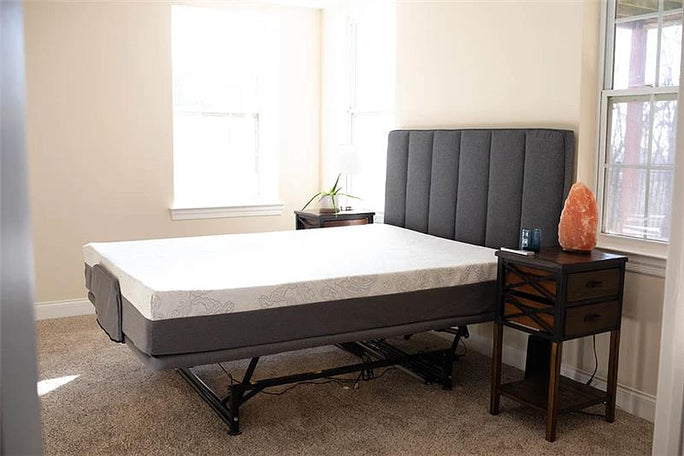
Most people who call us about a hospital bed hadn't given much thought to one before that week. Something changed, a fall, a new diagnosis, new instructions from a senior living facility, and suddenly there's a decision to make and not a lot of time to make it.
You don't need to become an expert. There are a handful of things worth understanding, and we can walk through the rest together.
Planning Where the Hospital Bed Will Go
Think about the room layout, and as a caregiver, think about which side you'll be standing on when you help.
If the room needs work before the bed arrives, we can help with that too. Our Room Readiness service gets the space ready and hauls away the furniture that's being replaced.
Adjustable Bed vs. Hi-Low Hospital Bed: What's the Difference?
A lot of people already have an adjustable bed, the kind that raises the head and the feet.
That's a good start, and it's not the same thing.
An adjustable bed articulates. A hi-low bed does that and raises and lowers the whole frame. That second part is what changes transfers and much more. When the bed can come up to meet someone, or drop low enough that their feet reach the floor, getting in and out stops being a struggle.
It changes things for the caregiver just as much. When the bed rises to your waist, you're not bending over to help someone sit up, or reaching down to reposition them, or lifting from an angle your back wasn't built for. You're working at the height you'd choose if you got to choose.
Hospital Bed Features Worth Understanding
Hi-Low Adjustment
The bed meets the person where they are. Higher when it's time to get up, so it's easier to step down out of bed. Lower when it's time to sleep, so it's easier to get in. It's easier on them and easier on your back.
Floor-Level Lowering
Some beds, the Med-Mizer AllCare and the SonderCare Aura among them, lower to within a few inches of the floor. For a caregiver, this provides great peace of mind.
Trendelenburg and Reverse Trendelenburg
These are the tilt positions, where the whole bed angles head-down or feet-down. A doctor may recommend them for circulation or breathing. They're also useful in ordinary ways: a slight tilt can make getting in and out noticeably easier. Most people have never heard the words, which is why we mention them.
Sitting Up Comfortably
Beds do more than lie flat. Zero gravity and other seated positions make sitting up genuinely comfortable, for eating, reading, having a conversation, watching a movie. These alternative positions also help reduce pressure and stress on key parts of the body.
Getting the Hospital Bed Size and Weight Capacity Right
Start with length. Standard hospital beds run 80 inches long. If the person is tall, over about six foot two, it's worth asking about an 84-inch length so their feet aren't hanging off the end. It's an easy thing to get right up front and a hard thing to fix later.
Then think about width, which really comes down to who's in the bed. For someone sleeping on their own, a full-size bed is often the better call. It's close to what most people are used to, and it keeps the person within easy reach. A queen can be a good option when a couple is sharing a bed.
Split king beds are also a great option for couples. A split king is two beds side by side under one headboard, each adjusting independently. One person can sit up and read while the other sleeps flat.
We had a customer buy one for a reason that has stayed with us. He and his wife had slept in the same bed for decades. She needed a hospital bed now, and he wasn't willing to move to another room. He bought the split king so they could keep holding hands at night.
We carry split kings from Flexabed and from Golden Technologies. With Flexabed in particular, the split king can pair a hi-low bed with one that's adjustable but not hi-low. So the person who needs the hi-low gets it, and their spouse gets a bed that fits them, without either one giving anything up.
One thing people don't expect: a split king doesn't have to look like a hospital setup. You can dress it up with a headboard or hang art on the wall behind it, and it reads as a normal, welcoming bedroom. If you go with a headboard, it gets bolted to the wall.
Weight Capacity, and Why It's Worth More Than You Think You Need
It's worth having more capacity than you think you need, and it usually has nothing to do with bariatric needs. Beds don't stay empty. Grandkids climb up to watch TV. A spouse sits down on the edge to visit and ends up staying an hour. The bed should hold whoever ends up on it. Our beds start at 400 pounds of capacity and go up from there.
Capacity can also do real work for you as needs change. The Med-Mizer AllCare, for example, holds up to 600 pounds and expands from 35 to 39 to 42 inches wide at the push of a button, so a single bed can adjust to a wider range of situations instead of being swapped out later.
One thing worth knowing: the bed frame and the mattress are rated separately, and they don't always match. Our Elite mattress, for instance, is rated to 450 pounds, so even on a 600-pound frame like the AllCare, the mattress is what actually sets the limit. We'll help you pair the two correctly so the capacity you're counting on is real.
Choosing the Right Hospital Bed Mattress
The mattress is worth real thought, and there's a genuine trade-off.
A thinner mattress conforms fully to the bed. You get the whole range of positions the frame is capable of, the full articulation, the deep recline, the zero gravity. A thicker, plusher mattress feels closer to what they're used to sleeping on, but it doesn't flex as completely, so you give up some of that range. The choice depends on whether positioning or comfort matters more for the person who'll be in it.
Beyond thickness, there's what's inside. We carry innerspring mattresses in firm, medium, and soft, and memory gel foam in a range of thicknesses. Foam is the standard and works well for most people. Gel adds cooling. Innerspring feels the most like an ordinary mattress, which matters to some people more than anything else on this list.
If the person is incontinent, a waterproof mattress cover is worth having from day one. We sell them, and if we don't have what you need, we'll help you find it.
Sheets follow the mattress, so a Twin XL mattress takes Twin XL sheets, and you rarely need anything special. If you're not sure what to buy, ask us. We'll tell you exactly what to look for.
Whatever you choose, the mattress has to match the bed's deck and articulation. We'll make sure it does.
Hospital Bed Accessories That Complete the Setup
Rails and side guards. A trapeze bar, useful both for people who can pull themselves up and as fall protection. An overbed table. Mattress covers.
These are what turn a bed into a setup that actually works. We'll go through which ones make sense for your situation and which ones you can skip.
See the Bed Before You Decide: Showroom Visits and Home Demonstrations
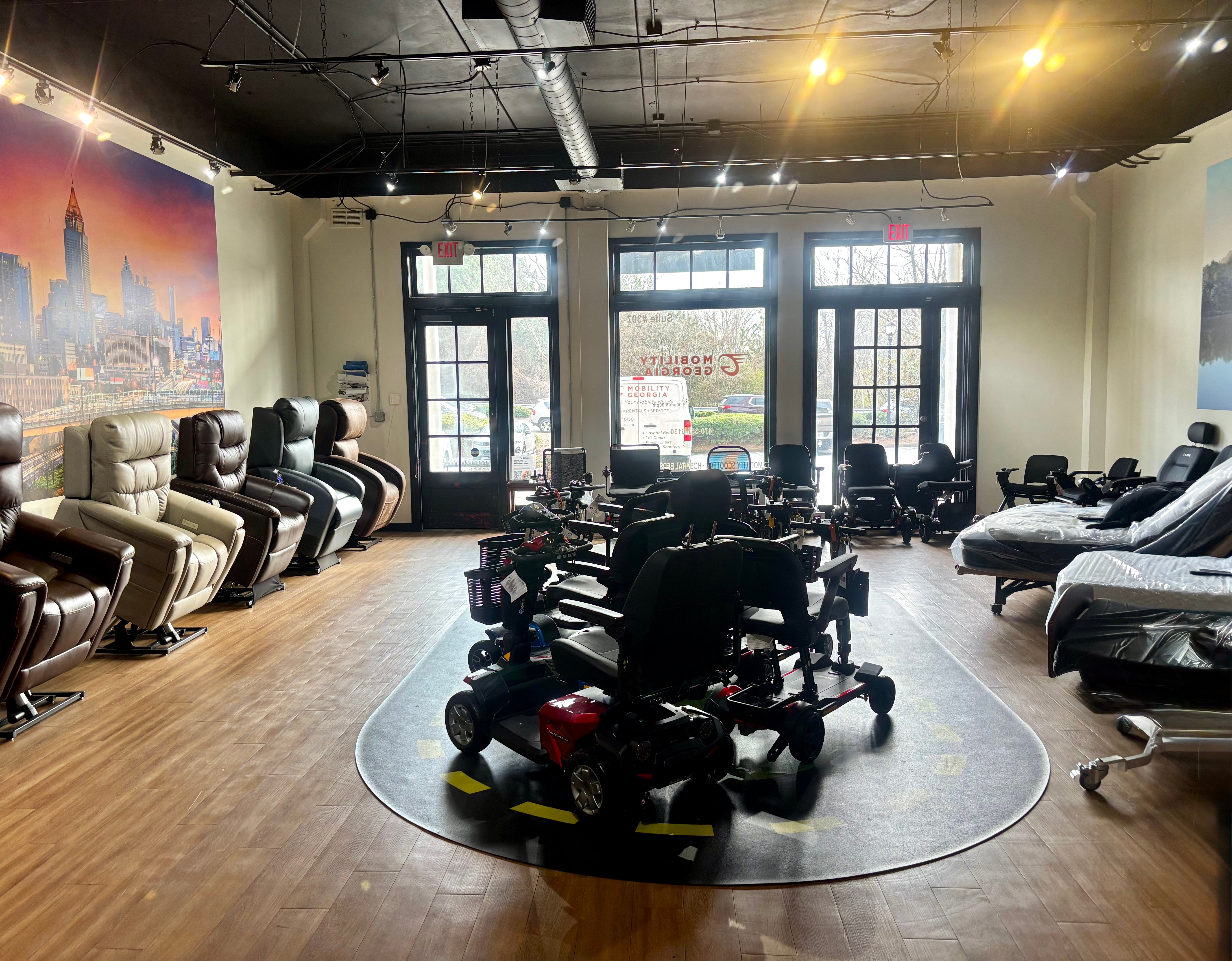
Come to the showroom in Smyrna and spend some time with the beds. Raise them, lower them, tilt them, lie down on the mattresses. It takes twenty minutes and you'll know more than any amount of reading can tell you.
Or we'll bring it to you. On a home demonstration, we deliver the bed, set it up in the actual room, show you how everything works, and let you try it where it's going to live. The fee credits one hundred percent toward your purchase.
A few practical notes. We bring one large item at a time, but you can ask for a second mattress to compare side by side before we take them out of the plastic. And try to have whoever's making the decision there, because we take the bed with us when we go, so it helps if everyone can see it together.
Buy, Rent, or Rent-to-Own a Hospital Bed
If this is for a recovery with an end date, it’s best to rent. If it's long-term, buying usually makes more sense.
If you're not sure, and a lot of people aren't, rent-to-own is the honest middle. You rent it, you use it, and if you decide to keep it your payments apply to the purchase.
Come See Us in Smyrna
We're in Smyrna, and we deliver all around Atlanta, even out to a hundred miles away. Wherever the bed is going, we bring it, set it up, and make sure it's working before we leave.
We also pair our beds with service plans, so the maintenance doesn't fall on you. If something needs adjusting, or a part needs replacing, we handle it and help you get what you need. A bed is something you live with for a while, and we'd rather stay in the picture than hand it over and disappear.
Call us at (470) 357-6130 or stop by the showroom. There's no pressure here, just people who do this every day and are glad to help.
Frequently Asked Questions
Is a hi-low bed worth it if we already have an adjustable bed?
For most home-care situations, yes. The head-and-foot articulation you already have is useful, but it's the rise-and-fall of the whole frame that makes daily transfers safer and easier, and that's the part an ordinary adjustable bed can't do. If you're doing a lot of lifting or helping, that's usually the feature that matters most.
How do I know what size to order?
Match the length to the person and the width to the situation. Order the 84-inch length if they're taller than about 6'2". Choose a full for a single sleeper who needs help getting up, and consider a split king if a spouse is sharing the bed. When in doubt, call us and we'll size it with you over the phone.
What happens if we only need the bed for a few months?
That's exactly what renting is for. And if a short-term recovery turns into something longer, rent-to-own lets your payments carry over toward owning it, so you're not penalized for guessing wrong at the start.
Do we need a special mattress, or will any hospital mattress do?
It has to match the bed's deck and the way it articulates, but past that it comes down to the person. If pressure relief is a concern, that points one direction; if familiarity and comfort matter most, another. We'll talk through your situation before you settle on one.
What if we're not sure any of this is right for us?
Try it first. Visit the Smyrna showroom, or have us bring the bed to your home on a demonstration and set it up where it's actually going to live. The demonstration fee credits fully toward a purchase, so seeing it in person costs you nothing if you move forward.
Comments